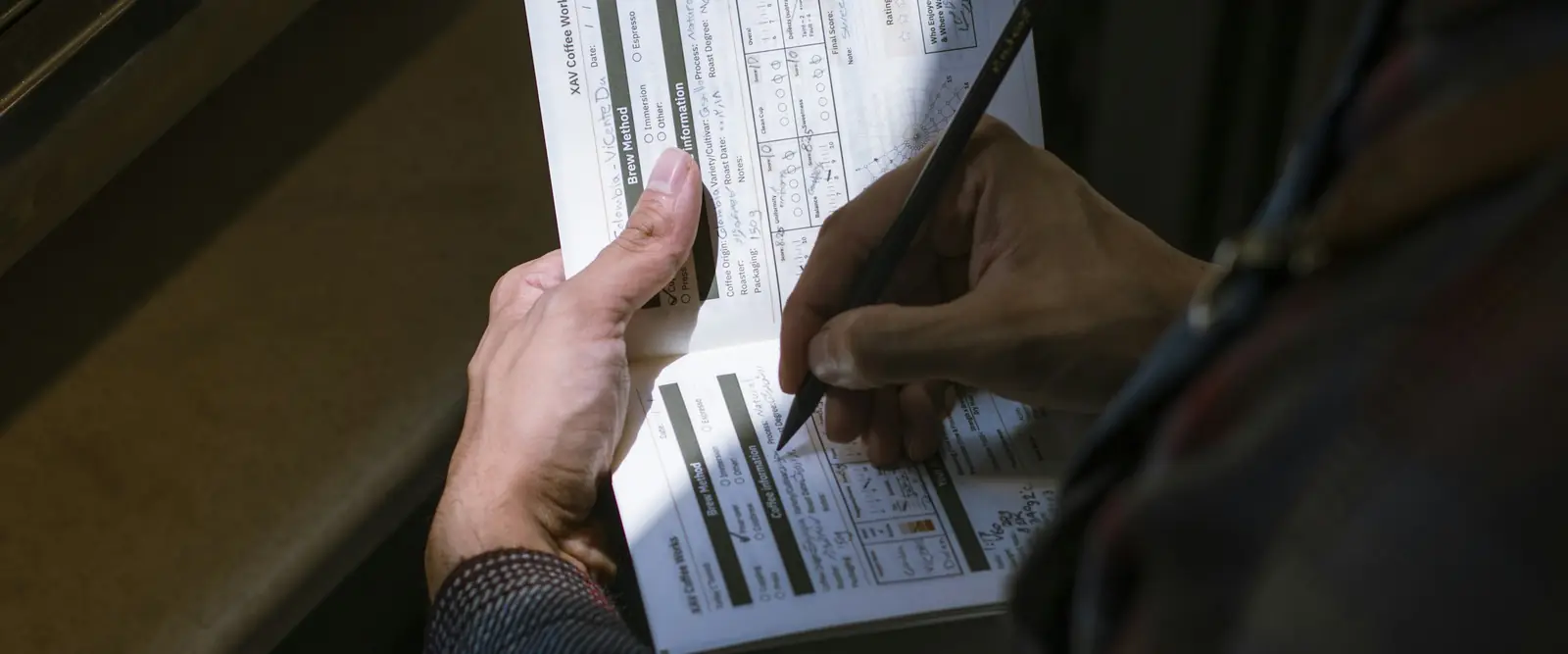
This guide follows FMCSA's official MCS-150 form and instructions, revised February 25, 2026. You can read it alongside the form, or use it to prepare before you file online in Motus, where the same information is collected.
Which version you file
| Form | Name | Who files it |
|---|---|---|
| MCS-150 | Motor Carrier Identification Report | Motor carriers operating in interstate commerce, whether domiciled in the U.S., Canada, Mexico or elsewhere |
| MCS-150B | Combined Motor Carrier Identification Report and HM Permit Application | Intrastate carriers that need a hazardous materials safety permit under 49 CFR part 385, subpart E |
| MCS-150C | Intermodal Equipment Provider Identification Report | Intermodal equipment providers offering equipment for interstate transportation |
That split comes from 49 CFR 390.19T(a).
Reason for filing
The top of the form asks why you're filing, and that decides which items you complete.
| If you want to | Reason for filing | Items to complete |
|---|---|---|
| Get a USDOT number for the first time | New application | All applicable items 1 to 31, except 16 and 28 |
| File your biennial update, or update your information | Biennial update or changes | Items 1 to 16, 21 and 30 to 31, plus any item that changed |
| Tell FMCSA you no longer operate as an interstate carrier | Out of business notification | Items 1 to 16 and 30 to 31 |
| Reapply after a new entrant registration was revoked | Reapplication | All applicable items 1 to 31, with your old USDOT number in item 16 |
| Reactivate an inactive USDOT number | Reactivate | All applicable items 1 to 31, with your USDOT number in item 16 |
If your company has ever had a USDOT number, don't apply for a new one. FMCSA's instructions say the only valid reasons then are an update, an out of business notification, reapplication or reactivation.
The items a biennial update asks for
Items 1 and 2: names
Legal business name is the name on your incorporation certificate, partnership agreement or tax records. A sole proprietor enters their own name; a corporation includes its type, such as "John Doe LLC". Doing business as is your trade name, if it's different.
Items 3 to 12: addresses
The principal place of business is where you run your transportation operation and keep safety records. FMCSA uses it for safety audits and investigations, so it can't be a P.O. Box, private mailbox or virtual office. The mailing address is where FMCSA sends correspondence, and it can be a P.O. Box. Items 7 and 12 are the Colonia, for addresses in Mexico.
Items 13 to 15: phone numbers
Your principal business phone (a cell is fine), a contact cell phone, and fax if you have one.
Items 16 to 20: identifiers
- 16: your USDOT number.
- 17: your MC or MX number, including pending ones.
- 18: your Dun & Bradstreet number, if you have one.
- 19: your EIN. Sole proprietors without one may give an SSN, though FMCSA encourages getting an EIN.
- 20: the email for your official point of contact.
Item 21: carrier mileage
Total miles for all your commercial motor vehicles in the previous 12 months, to the nearest 10,000. If you've operated less than a year, give miles to date. If you haven't operated in the last 12 months, enter 0.
The census keeps the year your mileage covers next to the figure, and SAFER shows both as "MCS-150 Mileage (Year)". A biennial update with this year's miles replaces both.
This number travels further than the form. FMCSA's Safety Measurement System takes mileage from the census, which is fed mainly by the MCS-150, and uses miles per power unit to adjust a carrier's Unsafe Driving and Crash Indicator measures. It uses only mileage reported in the past 24 months (SMS Methodology, June 2026). An old or missing figure can leave that adjustment out.
Items 30 and 31: people and certification
Item 30 lists the sole proprietor, two partners, or two corporate officers with their titles. Item 31 is the certification: the person authorized to sign for the company signs, dates and prints their name and title. That signer should be one of the people in item 30. An unsigned form is rejected.
Items to check if anything changed
A biennial update also covers any item where your information changed since your last update. These are the ones most likely to have moved:
- 22, company operations: interstate carrier, intrastate hazmat carrier, intrastate non-hazmat carrier, or hazmat shipper.
- 23, operation classification: authorized for-hire, exempt for-hire, private property, private passengers, and others. Choosing authorized for-hire also means you need operating authority (an MC or MX number).
- 24, cargo classifications: every type of cargo you haul.
- 25, hazardous materials: the classes you carry or ship, and whether in bulk or non-bulk.
- 26, vehicles: straight trucks, tractors, trailers, tank vehicles and passenger vehicles, each split into owned, term-leased and trip-leased.
- 27, drivers: interstate and intrastate drivers, within and beyond a 100 air-mile radius, the total, and how many hold a CDL. The interstate and intrastate counts should add up to the total.
The power unit counts in item 26 matter beyond registration too: the Safety Measurement System uses the number and type of power units from the census to scale a carrier's Unsafe Driving and Crash Indicator measures (SMS Methodology).
Closing or reopening a USDOT number with the form
Two reasons for filing change the status of the number itself:
- Out of business notification. Complete items 1 to 16 and 30 to 31. FMCSA asks for a copy of the driver's license of the person who signs the certification, and if active operating authority is linked to the number, Form OCE-46 as well, notarized or signed in front of FMCSA staff (FMCSA FAQ).
- Reactivate. Complete all applicable items 1 to 31 and give your existing USDOT number in item 16. FMCSA lists no processing fee for it. See how to check your DOT number status and reactivate it.
What FMCSA's census shows about filed forms
We counted what the 705,180 active interstate carriers in FMCSA's census, as of November 11, 2026, have on file from their MCS-150. The items that are most often blank or old are the ones a biennial update asks for:
| On file | Carriers | Share |
|---|---|---|
| Mileage (item 21) of zero or blank | 165,717 | 23.5% |
| Mileage for 2023 or an earlier year | 101,706 | 14.4% |
| No power units (item 26) | 47,100 | 6.7% |
| No drivers (item 27) | 34,836 | 4.9% |
| More CDL holders than drivers (item 27) | 683 | 0.1% |
| No email for the point of contact (item 20) | 15,853 | 2.2% |
Zero miles is a valid answer for a carrier that didn't operate in the last 12 months, so not every row is a mistake. But the Safety Measurement System only uses mileage reported in the past 24 months, so a mileage year of 2023 or earlier is already too old for it.
Method: FMCSA Company Census File as loaded on November 11, 2026; carriers with an active USDOT status and interstate operation. Counts of records only; we never name a carrier. Our status check shows one carrier's last MCS-150 date.
A filled-in biennial update, for example
An owner-operator with one tractor and one trailer, no changes since the last update except mileage. The company and numbers are made up.
| Item | Entered |
|---|---|
| Reason for filing | Biennial update or changes |
| 1. Legal business name | Jane Example (a sole proprietor gives her own name) |
| 2. Doing business as | Example Hauling |
| 3 to 7. Principal place of business | The yard where the truck is based and the records are kept, not a P.O. Box |
| 8 to 12. Mailing address | A P.O. Box is fine here |
| 13 to 15. Phones | Business phone and contact cell |
| 16. USDOT number | 1234567 |
| 17. MC number | MC-000000 |
| 19. EIN | The business EIN |
| 20. Email | An inbox she reads |
| 21. Mileage | 110,000 (108,400 miles in the last 12 months, rounded to the nearest 10,000), year 2026 |
| 30. Company officials | Jane Example, Owner |
| 31. Certification | Signed and dated by Jane Example, Owner |
Items 22 to 27 stay as they were because nothing changed. If she had added a second truck or a driver, she would update item 26 or 27 as well.
If you only operate in one state
The federal rule makes intrastate carriers file only in one case: an intrastate carrier that needs a hazardous materials safety permit files the MCS-150B (49 CFR 390.19T(a)(2)). Many states, though, require their own intrastate carriers to hold a USDOT number and keep it current, and those carriers file the regular MCS-150 marked as intrastate in item 22. Check your state's rules.
Intrastate records in the census are much staler than interstate ones: our count finds 635,505 intrastate carriers still marked active and past due (past-due statistics).
Mistakes that get forms rejected or wrong
- A P.O. Box or virtual office as the principal place of business.
- Mileage that isn't rounded to the nearest 10,000, or covers the wrong period.
- Driver totals that don't add up, or more CDL drivers than drivers.
- A certification signed by someone who isn't listed in item 30, or not signed at all.
- Applying for a new USDOT number when the company already has one.
Where and how to file
File online in Motus. It's free, it checks your entries as you go, and FMCSA estimates about 20 minutes to complete the form online, or 7.5 minutes for a biennial update. Our step-by-step Motus guide covers logging in and claiming your company.
Filing a paper form by mail
The regulation also allows filing by mail (49 CFR 390.19T(d)). Before Motus, FMCSA's page on biennial updates gave this address and warned that a mailed form must reach FMCSA on or before your due date (FMCSA, updated October 22, 2025):
U.S. Department of Transportation
Federal Motor Carrier Safety Administration
Attention: Office of Registration
1200 New Jersey Avenue, S.E., Room W65-206
Washington, DC 20590
The form's instructions say mailed applications take four to six weeks on average, and unsigned, unreadable or incomplete forms are sent back. Sign item 31 and keep a copy.
Check what FMCSA has on file
FMCSA says updates to a USDOT number show on the SAFER Company Snapshot (FMCSA). Look for "MCS-150 Form Date" and "MCS-150 Mileage (Year)" there, or search the number in Motus Public Search. Our MCS-150 lookup shows the date from FMCSA's census data with your next due date.
Questions
Where do I get the MCS-150 form?
FMCSA publishes the form and its instructions on its registration forms page (PDF, revised February 2026). For a biennial update you don't need the paper form; you make the update online in Motus.
Can I use a trade name?
Only your legal name or a single trade name may be used on the form (49 CFR 390.19T(f)).
Will my information be public?
FMCSA warns that when a sole proprietor gives personal details as the business contact, such as a home address, phone or email, that information will be publicly available on FMCSA websites.
Is there a penalty for false information?
Yes. Failing to file, or giving misleading information or false statements on the form, is subject to penalties under 49 U.S.C. 521(b)(2)(B) (49 CFR 390.19T(g)).
What if I stopped operating?
The form has an "Out of Business Notification" reason for filing. Use it to tell FMCSA you no longer operate as an interstate motor carrier, rather than leaving your registration to lapse.
How long does the MCS-150 take to fill in?
FMCSA's form puts it at about 20 minutes for a full application and 7.5 minutes for a biennial update. The first time in Motus, setting up Login.gov and identity verification adds to that.
Can I mail the MCS-150 instead of filing online?
Yes, the rule allows it (49 CFR 390.19T(d)). FMCSA says a mailed biennial update must reach it on or before your due date, and its instructions say mailed applications take four to six weeks on average. Online is faster.
Where do I see the MCS-150 date FMCSA has on file?
On FMCSA's SAFER Company Snapshot, under "MCS-150 Form Date", next to the mileage and the year it covers. Our lookup shows the same date from FMCSA's census data, with your next due date.
Sources
- FMCSA Form MCS-150 and instructions (Rev. February 25, 2026)
- FMCSA: Registration forms
- 49 CFR 390.19T, eCFR (current to November 12, 2026)
- FMCSA: Updating Your Registration or Authority (updated October 22, 2025)
- FMCSA FAQ: How do I inactivate my USDOT number? (updated May 20, 2023)
- FMCSA: SMS Methodology, version 3.21 (document revised June 2026)
- FMCSA SAFER Company Snapshot
- FMCSA Company Census File, data.transportation.gov
Last reviewed November 15, 2026.